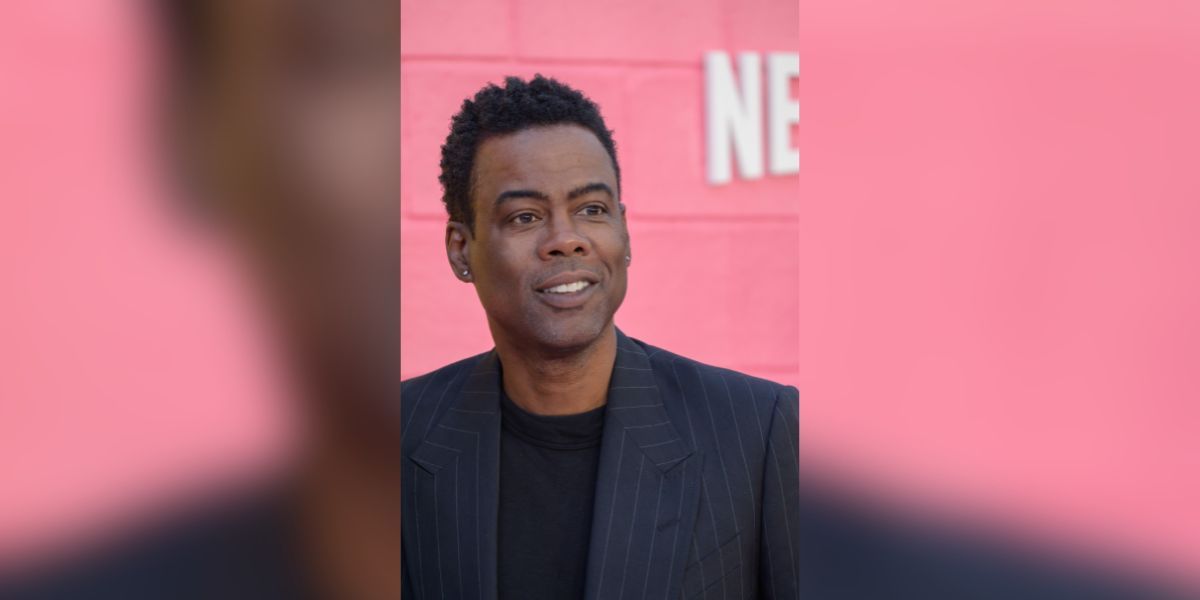
Chris Rock has spent a career turning other people’s discomfort into a punchline. Recently on a New York Times podcast this month, he turned it on himself Speaking on The Interview, Rock went back to the block he grew up on in Bedford-Stuyvesant: Decatur Street, between Howard and Saratoga. A guy from that block, he said, the brother of one of his best friends, had gone to prison for a murder he did not commit. Rock said he grew up with him. His name is Roger Logan. Rock said he did 19 years. The court record says closer to 17.
Logan’s brother used to plead with him to pay for a lawyer. Rock never did. He had a rule, he said. A lawyer is an open-ended thing. A mortgage has a number. School fees have a number. He has paid for those but he stayed out of legal fees, because you never know when they stop.
“I had the means to help him, and I didn’t. And I don’t know if we could have got him out or not, but still.”
He folded the admission into a larger argument about race and accusation. “When you’re Black, white people believe every accusation is a conviction,” Rock said. Black men, he went on, get accused of things they did not do all the time.
The papers, in his telling, are full of the same correction: a man walks out after decades, the system says whoops, and the story moves on. He was talking, in the same stretch of the interview, about how he handles rumour now. If someone is accused, he said, you had better be sure.
The clip moved fast. Within a day it was being cut, captioned and argued over, stripped of the podcast and reduced to the confession: a rich comedian, a friend from the old block, a lawyer he would not pay for. Some listeners heard a rare piece of honesty. Celebrities rarely volunteer the help they withheld. Others heard a man narrating his own failure and asking the audience to sit with it, years after the damage was done. A common reply was that “I don’t pay for lawyers” is not a principle. It is a way of saying no. A retainer is a number. Rock, the critics said, could have set one.
On the evening of 24 July 1997, 18-year-old Sherwin Gibbons was shot dead in the vestibule of the apartment building where he lived on Chauncey Street in Bedford-Stuyvesant. Police and prosecutors said Logan had killed him in payback for a gold chain stolen after a dice game. Logan was convicted of second-degree murder and sentenced to 25 years to life. The investigation was run by detective Louis Scarcella, whose cases would later become a catalogue of Brooklyn wrongful convictions: coerced identifications, witnesses who could not have seen what they swore to, files that did not survive a second look.
Logan learned from prison that the district attorney’s office was reviewing Scarcella’s work. He wrote in and asked to have his own file opened. He didn’t have a lawyer do it for him. Under Kenneth Thompson, who beat longtime Brooklyn district attorney Charles Hynes in 2013, the Conviction Review Unit reviewed the case. A key eyewitness, according to the National Registry of Exonerations, had been in custody the day before the shooting, and the earliest she could have been released was around 7 pm on the day Gibbons was killed. That undercut her claim that she had seen Logan several times beforehand. Had the defence and the judge been told, her identification in court would likely have been barred, or at least badly damaged.
Investigators then found four people who had been in the vestibule. Only one placed Logan at the scene, and that witness said Logan was not the shooter. The dice game and the stolen chain checked out. The identification did not. On 3 June 2014, Logan was brought to Kings County Supreme Court. Prosecutors asked to vacate the conviction. The charge was dismissed. He walked out at 53.
By then, his parents were dead. A younger brother was dead. The daughters who had been girls when he went in had children of their own. In January 2016, New York City settled his claim for $US3.75 million. He also received about $US2.98 million from the state. The city’s comptroller at the time, Scott Stringer, announced the city figure. It is the sort of number that looks large in a headline and small against 17 years.
Rock did not claim he knew Logan was innocent when the brother was asking. He did not claim a private lawyer would have beaten Scarcella’s case in the late 1990s, when those convictions were still sticking. He said he does not know. The regret, as he framed it, is narrower than the internet version and harder to dodge: he could have paid; the cost scared him because it had no ceiling, and a man from his block sat in a cell while he decided that was reason enough.