
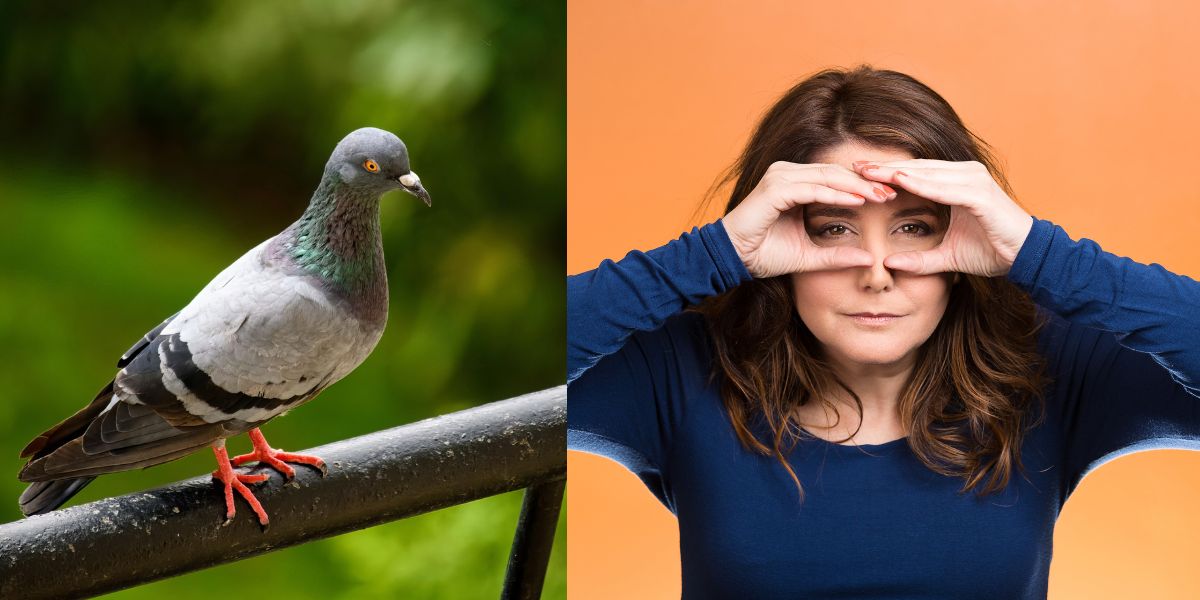
People see adult pigeons almost everywhere in Australian cities, but spotting their young is unusually rare. The absence has sparked endless curiosity, especially since other young birds, like ducklings and goslings, wander openly behind their parents. Scientists say the explanation is surprisingly simple, and it comes down to nesting behaviour and the way pigeons develop.
Baby pigeons, known as squabs, spend their early life tucked inside high, sheltered nests. These spots mimic the rocky cliff faces their ancestors used, so modern pigeons choose ledges, roof cavities, bridges, and other elevated structures that keep predators and people out. Squabs stay in these enclosed spaces for weeks, growing rapidly under the protection of both parents.
By the time a squab finally leaves the nest, it is almost the size of an adult bird. Researchers note that this near‑adult appearance makes them basically indistinguishable from older pigeons, so even when you do cross paths with one, you would never realise it is only a few weeks old. This secretive upbringing explains why baby pigeons are essentially invisible in busy urban environments.
Adult pigeons feed their young on a nutrient-rich substance called “crop milk”, which helps them grow quickly while staying fully hidden. Along with the fact they do not wander or follow their parents around like other species, the result is a baby bird that stays out of public view for almost its entire youth. Once it steps into the world beyond the nest, it blends straight in with the rest of the flock.
The next time someone jokes that baby pigeons are a myth, the science shows the opposite is true. They are very real, just incredibly well hidden. So while the adults strut confidently around city streets, their young are quietly growing up high above us, safely out of sight.